
Everything You Need to Know About Sworn Translations
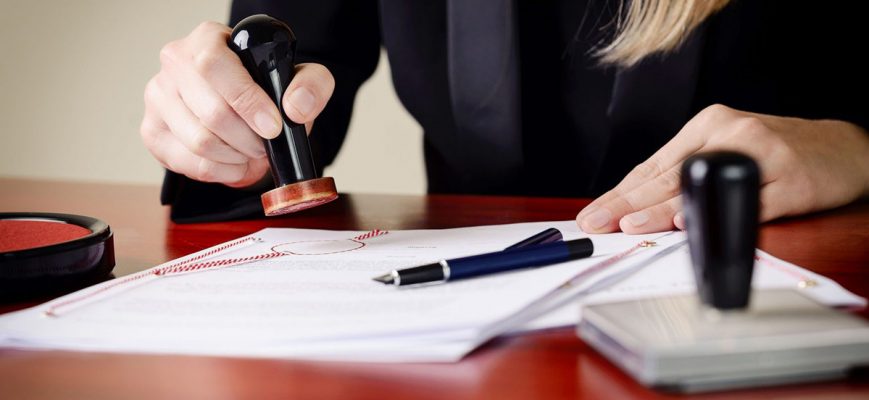
- A sworn translation is a translation of document which — in order to be legally valid in the target language — must have been translated by an officially accredited translator.
- Many official bodies require certain documents to be translated in this way. Depending on the country, these documents could include naturalisation papers, academic qualifications, legal contracts, etc.
- In many countries, a sworn translation can only be supplied in a hard copy, as it has to include the signature and seal of the translator.
- To clarify, only authorised, certified sworn translators can provide sworn translations.
Sworn Translators work on legal documents
Legal translation demands accuracy above all else. The wording of a legal document is incredibly precise in order to remove any ambiguity or possibility of divergent interpretations. A translation of it must reflect that.
This means that the language — ie. style and tone — of the translation is not as important as it would be in the case of a marketing document, say. The original is likely to have been written in a ‘legalese’ which will be almost as unfamiliar to a native speaker, as a translation of it. For this reason, the translator can reproduce exactly the chain of ideas expressed in the text, without worrying if the translation reflects how people actually speak.
As with any technical document, it is important that a translator of legal texts is absolutely au fait with current terminology; both in the country of the source text, and the country the translation is intended for.
In addition, legal documents are often hugely important — property deeds, contracts, financial reports. Even a slight slip-up could have far-reaching consequences. Accuracy must be the watchword of the legal translator.
Who are Sworn Translators?
A sworn translator is simply a translator who, at some point in their career, took and passed the relevant test. It is important to emphasise that this does not necessarily mean that their work will be better than a ‘non-certified’ translator’s.
There are two reasons for this. Firstly, in order to take the certification test you will already be a qualified and (probably) experienced translator, so the test itself does not focus overmuch on technical ability.
Secondly, perhaps more importantly, in many countries certification is ‘for life’. This means that a certified translator could potentially have obtained their certificate thirty years ago. Now, there is a pretty constant demand for sworn translations, which could enable a sworn translator to do this sort of work and no other for their entire career. (Some people might argue that this would be rather a dull career, but that is another question.) Theoretically then, it is possible that a sworn translation could be of a lower standard than one produced by a translator who is up-to-date on the latest developments in the industry; although this would be unusual.
In reality, we usually assume that sworn, and technical translators, possess the highest level of expertise. Furthermore, a sworn translator can never be careless when working! More importantly, a sworn translator cannot be lax with research. If they are, they run the risk of being charged with negligence, perjury, or even contempt of court. QuickSilver Translate works with a number of experienced, certified sworn translators to provide this service.